
Fast-cure, UV-stable floor systems
Polyaspartic Floor Coating in Daytona Beach, FL
A coating that handles sunlight, resists hot tires and gets your garage back in use quickly.
- Free on-site estimates with a slab moisture test
- UV-stable topcoats on any floor the sun reaches
- Written, itemized price before any work starts
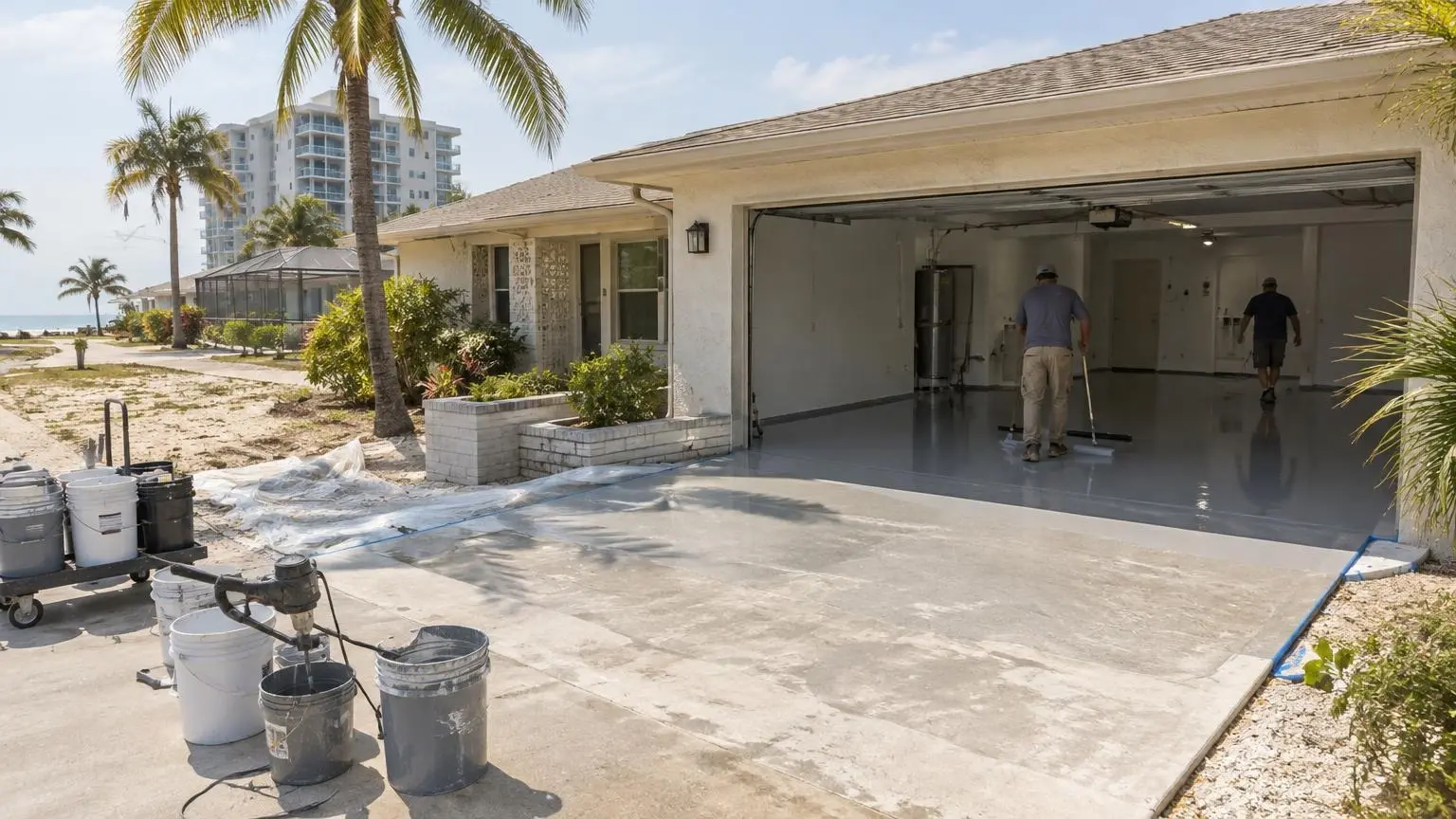
Why Polyaspartic Fits This Climate
Polyaspartic floor coating is a type of polyurea that cures quickly and holds up well in sunlight. In Daytona Beach, that second point matters as much as the first. HomeGuide rates standard epoxy's UV resistance as poor to fair and polyaspartic as excellent. Garages with the door open on sunny afternoons, covered lanais and porches all get enough light to yellow a plain epoxy floor. A polyaspartic topcoat or full polyaspartic system keeps its color.
How it compares with epoxy
HomeGuide's comparison sums it up. Polyaspartic costs about $5 to $12 per square foot installed, against $4 to $10 for epoxy. Epoxy goes on thicker per coat, about 10 to 20 mils, while polyaspartic goes on at about 2 to 6 mils per coat, so systems usually use more coats or a flake build. Polyaspartic reaches full cure in about one to two days. Standard epoxy can take up to a week. HomeGuide puts polyaspartic's lifespan at 10 to 20 years or more when properly applied and maintained.
Faster return to service
For many families the speed is the selling point. A garage that holds two cars, a freezer and the laundry is hard to empty for a week. With a polyaspartic system, the floor is usually dry to the touch within hours, ready for foot traffic later the same day, and ready for vehicles in about 24 to 48 hours according to HomeGuide. Exact times depend on the product, temperature and humidity, and we give you yours in writing.
Fast cure means careful prep and timing
Polyaspartic sets quickly, so there is no time to fix mistakes once it is down. The concrete has to be diamond ground, clean, repaired and tested before the first coat. Humidity also matters. Some polyaspartic products react with moisture in the air, and very humid, hot days can shorten working time. We measure the air and slab before every coat and plan summer installs for the early part of the day.
Full system or topcoat only
There are two common ways to use polyaspartic. A full polyaspartic system uses it for the base, the flake layer and the topcoat. That gives the fastest turnaround and strong UV performance in every layer. A hybrid system uses a 100% solids epoxy base, which goes on thick and fills small surface flaws, then a polyaspartic topcoat for UV and wear. We choose based on the slab, the moisture test and how fast you need the space back.
Good fits for polyaspartic around Daytona Beach
- West-facing garages that get strong afternoon sun
- Covered lanais and screened porches
- Golf cart and boat storage where the door stays open
- Garages that must be back in use within a day or two
- Commercial entries and display floors with big windows
- Recoating a worn epoxy floor with a UV-stable top layer
Hot tires and wear
Polyaspartic topcoats are hard and resist abrasion, which helps with the hot tire pickup that troubles thin coatings in warm weather. The coating is only as strong as its bond, though. A polyaspartic finish laid over paint, sealer or oily concrete can still lift. That is why every job starts with grinding and testing.
Care
Sweep sand often and mop with a pH-neutral cleaner. Rinse pool chemicals and fertilizer off soon after a spill. Avoid dragging metal edges across the floor. A well-kept polyaspartic floor can be lightly scuffed and recoated years later without starting over.
What This Covers
We install polyaspartic as a complete floor system or as a topcoat over epoxy.
Full polyaspartic flake system
Base, flake and topcoat all in polyaspartic for the fastest return to service.
Epoxy base, polyaspartic top
A thick epoxy base for bonding and fill, finished with a UV-stable polyaspartic topcoat.
Solid-color polyaspartic
A tinted system with optional anti-slip texture for a clean look.
Recoat of an existing floor
A sound older coating scuffed and topped with polyaspartic to restore gloss and UV protection.
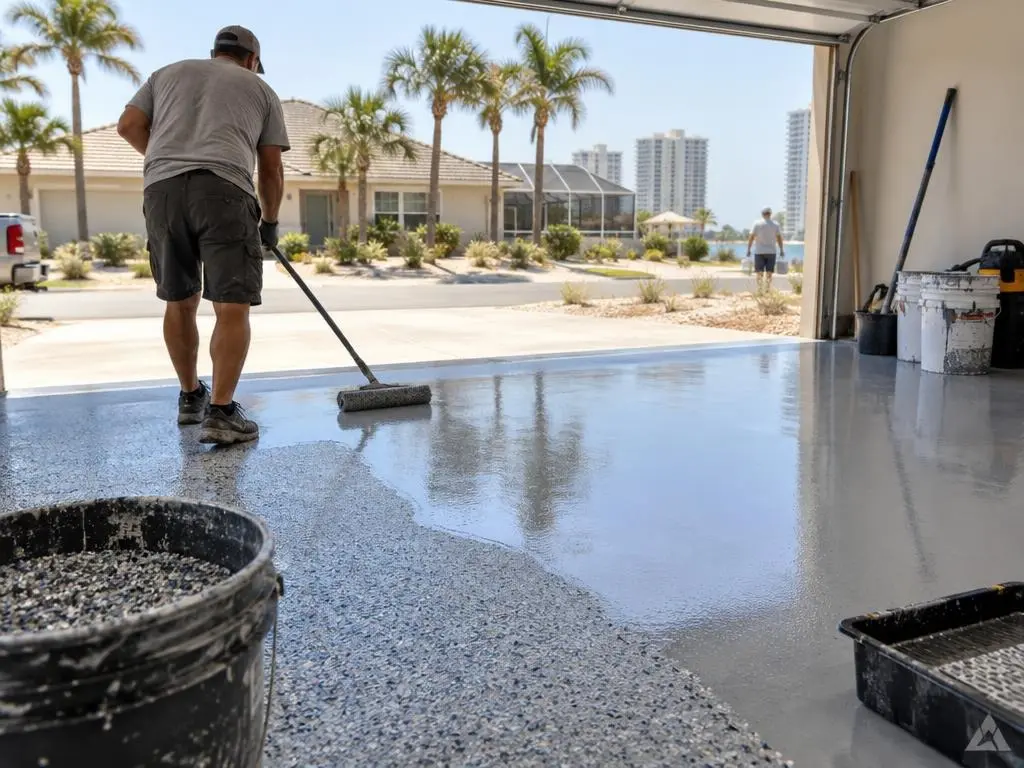
Typical Polyaspartic Floor Coating Costs
| Job | Published range |
|---|---|
| Installed polyaspartic, per square foot | $5 to $12 |
| One-car garage (288 to 392 sq ft) | $1,400 to $4,700 |
| Two-car garage (400 to 576 sq ft) | $2,000 to $6,900 |
| Three-car garage (576 to 864 sq ft) | $2,900 to $10,400 |
| 300 sq ft floor | $1,500 to $3,600 |
| 600 sq ft floor | $3,000 to $7,200 |
National ranges from HomeGuide's polyaspartic floor coating cost guide. Prep, old coating removal and the number of coats change the total. Your written estimate is the price.
How It Works
1. Test and plan
We test the slab, check where the sun hits and pick a full or hybrid system.
2. Grind and repair
The floor is diamond ground, cleaned and every crack is filled.
3. Coat in the right window
Coats go on when temperature, humidity and dew point are in range, often early in the day.
4. Quick return
Foot traffic usually the same day and vehicles in about one to two days, confirmed for your floor.
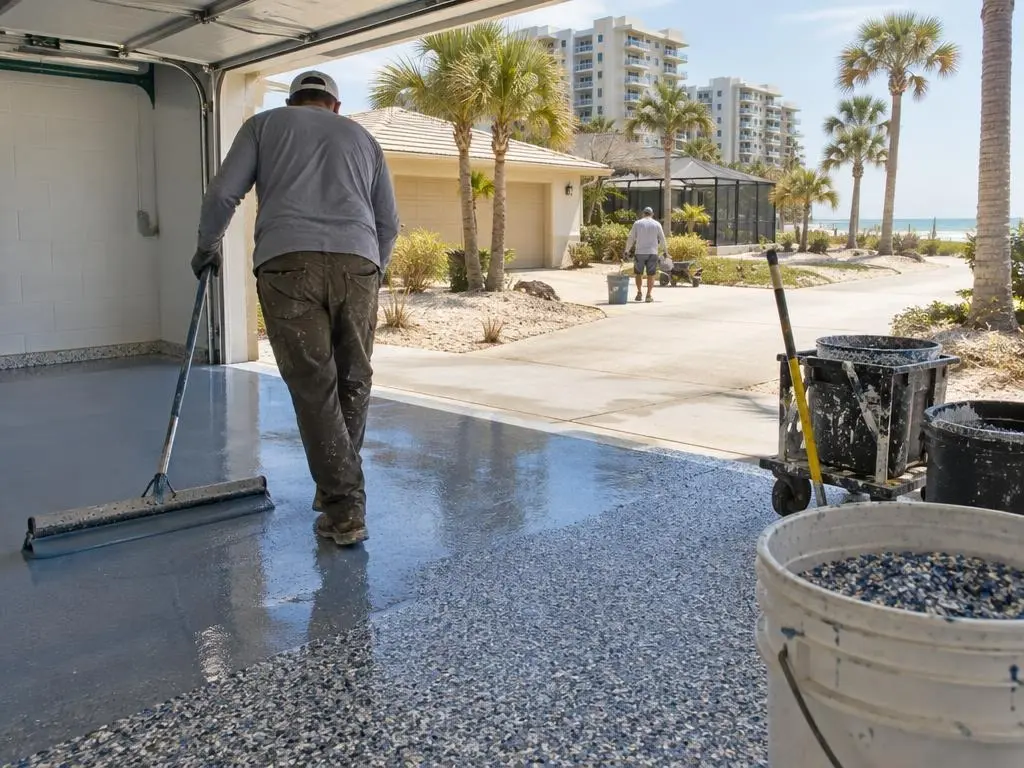
Polyaspartic Floor Coating Questions
Is polyaspartic better than epoxy in Florida?
For surfaces that see sunlight, usually yes. HomeGuide rates polyaspartic's UV resistance as excellent and epoxy's as poor to fair, and polyaspartic cures much faster. Epoxy still makes a good base coat because it goes on thicker and bonds well, so many floors use both.
How much does a polyaspartic garage floor cost?
HomeGuide lists about $2,000 to $6,900 for a two-car garage and $2,900 to $10,400 for a three-car garage, or $5 to $12 per square foot. We price your floor after measuring and testing it.
How soon can I drive on a polyaspartic floor?
HomeGuide says polyaspartic reaches full cure for heavy vehicle traffic in about 24 to 48 hours. Heat and humidity on install day affect that, and we give you a specific time.
What are the downsides of polyaspartic?
It costs a little more than epoxy, it is not a DIY product, and its short working time leaves no room for poor prep. Thin coats also mean a flake build or extra coats are needed for thickness. Good grinding and testing handle most of the risk.
Polyaspartic Floor Coating Service Areas
- Epoxy Flooring in Daytona Beach, FL
- Epoxy Flooring in Ormond Beach, FL
- Epoxy Flooring in Ormond-by-the-Sea, FL
- Epoxy Flooring in Holly Hill, FL
- Epoxy Flooring in South Daytona, FL
- Epoxy Flooring in Port Orange, FL
- Epoxy Flooring in Daytona Beach Shores, FL
- Epoxy Flooring in Ponce Inlet, FL
- Epoxy Flooring in New Smyrna Beach, FL
- Epoxy Flooring in Edgewater, FL
- Epoxy Flooring in Oak Hill, FL
- Epoxy Flooring in Samsula-Spruce Creek, FL
- Epoxy Flooring in DeLand, FL
- Epoxy Flooring in Deltona, FL
- Epoxy Flooring in DeBary, FL
- Epoxy Flooring in Orange City, FL
- Epoxy Flooring in Lake Helen, FL
- Epoxy Flooring in DeLeon Springs, FL
- Epoxy Flooring in Palm Coast, FL
- Epoxy Flooring in Flagler Beach, FL
- Epoxy Flooring in Bunnell, FL
Get a Polyaspartic Floor Coating Estimate
Free on-site estimates for polyaspartic floors in Daytona Beach and nearby.